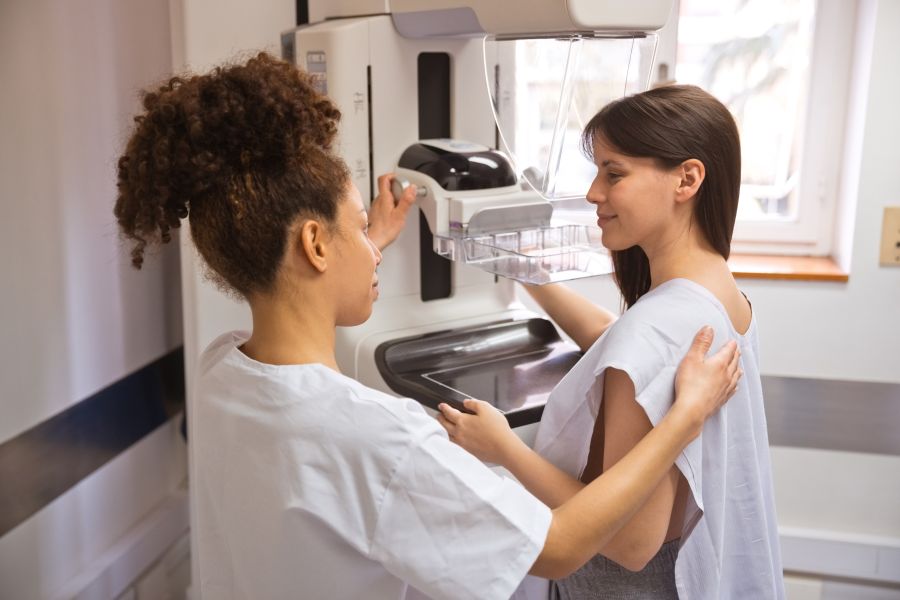
Did you know that a mammogram does more than just look for signs of breast cancer? It can also provide information that helps estimate a patient's risk of developing the disease.
Understanding the information in your mammogram report can help you and your healthcare providers determine whether additional screening or risk-reduction strategies may be appropriate.
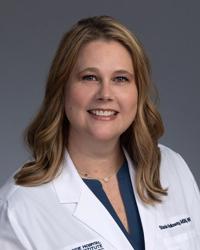
"Mammograms are so incredibly important," says Stacie Holloway, a nurse practitioner with Northside Hospital’s High-Risk Clinic. "And it's important to understand what they tell us about your breast cancer risk. We can collect data all day long, but are there actionable things that we can consider?"
What's in your mammogram report
The report includes the radiologist's findings and breast density grade. Some reports may also include an estimate of a woman's breast cancer risk, which is based on personal and family health factors such as age, reproductive history, breast density, previous breast biopsies, body mass index and hormone use.
If a mammogram shows no suspicious findings, the report will recommend when to return for the next screening. An abnormal finding may lead to additional imaging. This could include additional mammogram views, an ultrasound or both.
But "just because you have a callback from your mammogram, it does not mean you have cancer," Holloway says. "It just means that we need a couple more images, so don't postpone because you're fearful."
What does breast density mean?
Breast density describes the relative amount of dense tissue compared with fatty tissue in the breast. Dense tissue is normal and not a disease. It consists primarily of milk-producing glandular tissue and fibrous connective tissue that supports the breast. It can only be determined by mammography and is classified into four categories, ranging from almost entirely fatty to extremely dense.
Breast density is influenced in part by genetics, age, body fat and hormones. It tends to decrease with age, although it can remain high in some postmenopausal women. Mammographic breast density also may increase in roughly one-third of women on menopausal hormone therapy, most often with combined estrogen-progestin regimens; these increases are generally small in magnitude.
Why does breast density matter?
Breast density is important because the dense tissue can make breast cancer more difficult to see on a mammogram, and women with dense breasts have a higher risk of developing breast cancer.
Increased risk
Researchers continue to investigate why dense breast tissue increases breast cancer risk, and the cause is likely multifactorial. Most cancers arise in the glandular tissue, where cells divide under hormonal stimulation throughout a woman's life. Each division can introduce genetic errors that may accumulate and lead to cancer.
"If you have more dense structures, you have more real estate for cancers to develop as opposed to someone who has a fatty breast,” Holloway says.
Emerging research is also suggesting that the surrounding connective tissue may also contribute to risk.
Reduced visibility
On a mammogram, fibroglandular tissue appears white, as can some breast cancers, while fatty tissue appears dark. A white cancer stands out against a darker, fatty background, which makes it easier to detect. In dense tissue, finding a cancer can be like spotting a polar bear in a blizzard. But that does not mean mammograms aren't useful for women with dense breasts. It means additional screening, such as breast MRI, may be recommended.
"Mammograms are currently our gold standard for early detection," Holloway says. "Mammograms are looking for masses, but they can also find early indicators of cancer, even before a mass has formed, that an MRI may not detect. So if you want to catch cancer as early as possible, mammography is our better tool."
Who is at higher risk?
A woman whose calculated lifetime risk of developing breast cancer is 20% or higher may be considered high risk, and an MRI may be recommended in addition to mammography. For some women, the screenings may be performed annually and alternated about six months apart.
But no risk model can predict with certainty whether an individual will develop breast cancer. Risk calculators enter a woman's personal information into a formula based on large population studies. The formula weighs how much each factor raises or lowers her risk compared with the average woman, which is why accurate and complete information is essential.
"Quality in, quality out," Holloway says. "The risk calculation model is only as good as the information it is given. Sometimes inaccurate or incomplete questionnaires can lead us to falsely elevated or falsely lowered risk estimates."
Can breast cancer risk be reduced?
Some breast cancer risk factors, such as age, family history, inherited genetic variants and breast density, cannot be changed. But other factors can be modified.
Maintaining a healthy weight, being physically active and limiting alcohol consumption are among the measures associated with lower breast cancer risk. For some women at increased risk, medications may also be an option.
However, these medications have potential side effects and are not appropriate for everyone. The decision involves weighing the potential reduction in breast cancer risk against the medication's potential harms and a woman's individual health history.
Bottom line
Holloway encourages women to discuss their personal and family history with their healthcare provider and to follow the breast cancer screening recommendations that are appropriate for their age and individual risk.
Two women with the same lifetime risk percentage may have very different reasons for that risk and, consequently, different recommendations for screening or risk-reduction strategies.
"It's really important to dive into the risk estimate. We can work through that conversation with you," Holloway says. "I just plead with you to get your mammogram. It saves lives."
LEARN MORE ABOUT BREAST CANCER CARE AT NORTHSIDE.